
Congregate in the company of cattails.
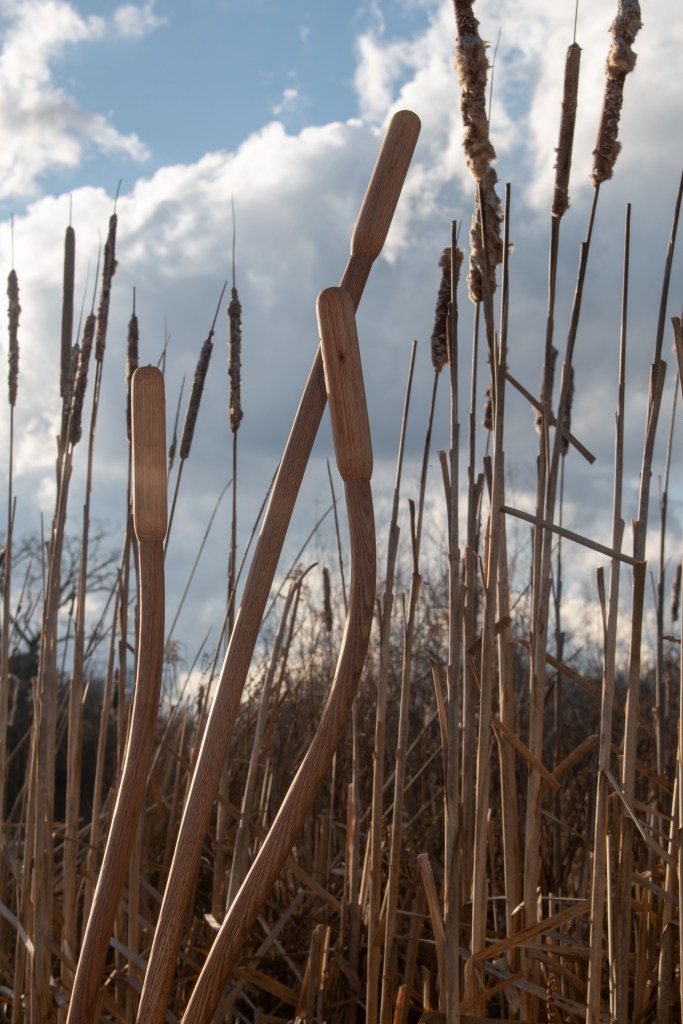
The Typha Chair is constructed with steam-bent red oak harvested through traditional logging practices at the Marsh Billings National Historical Park in Woodstock, Vermont. The upholstery fabric was made by Victoria Neyman of RISD Textiles (2027).
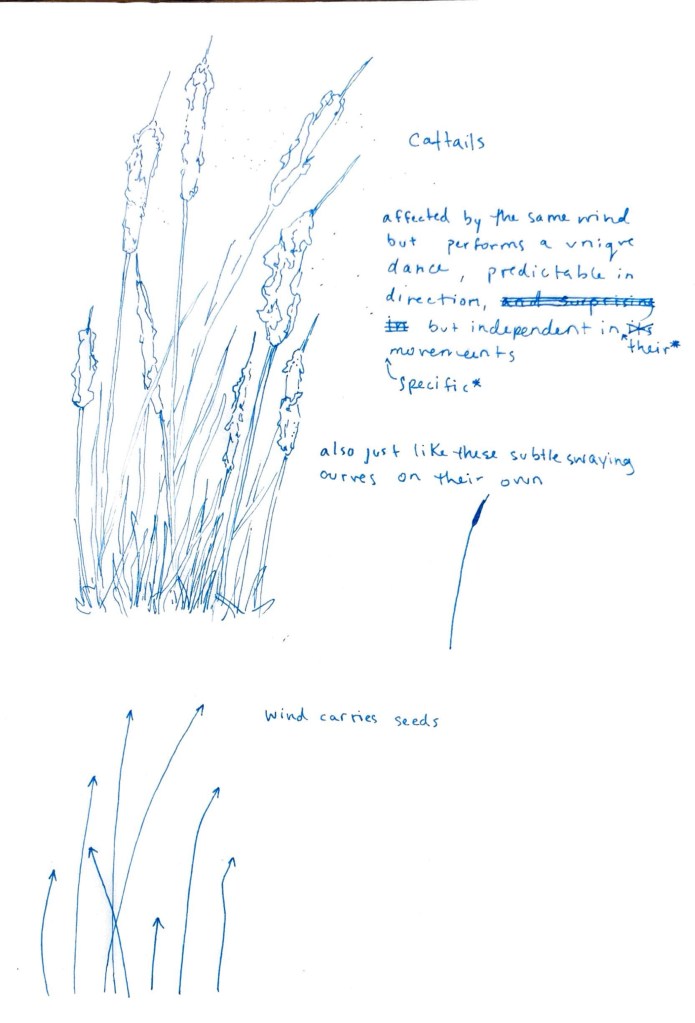
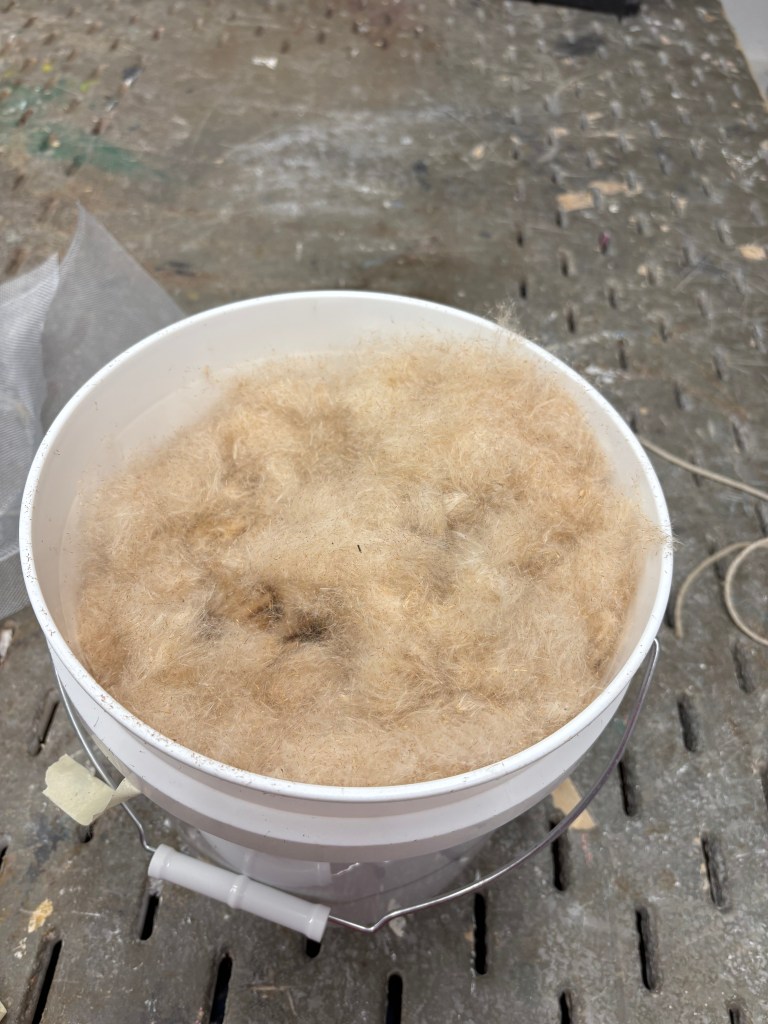
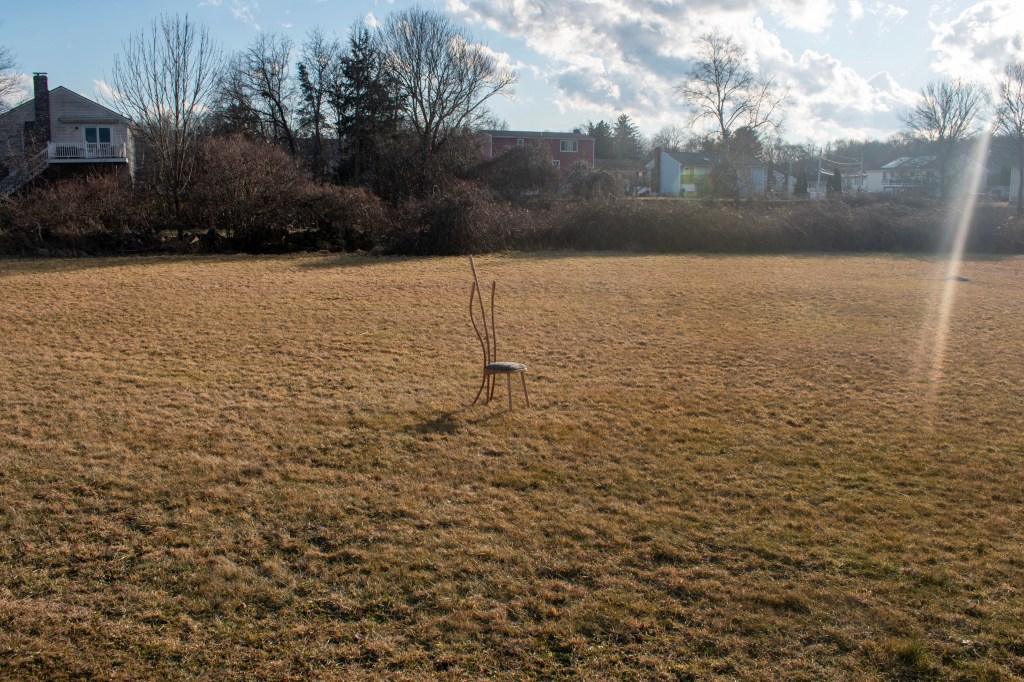
In an attempt to find a sustainable, local alternative to polyurethane foam stuffing, Claire experimented with the fluff of invasive cattails collected at a park in her hometown. Cattail fluff has been used by indigenous communities to stuff baby cribs and was used to upholster plane seats during WWII. The material is highly insulating and naturally hydrophobic.
Woven: wool, various collected local plant fibers (dogbane, milkweed cordage)
Dye: iron, oak gall, seaside goldenrod, overdyed with indigo
24″ x 14″ x 58″
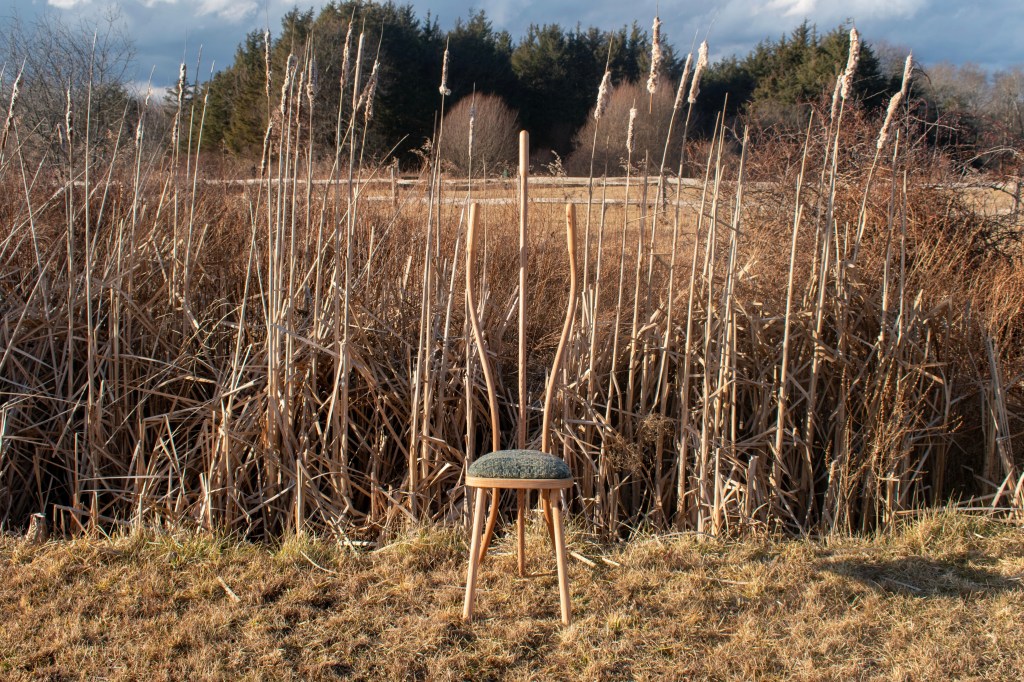
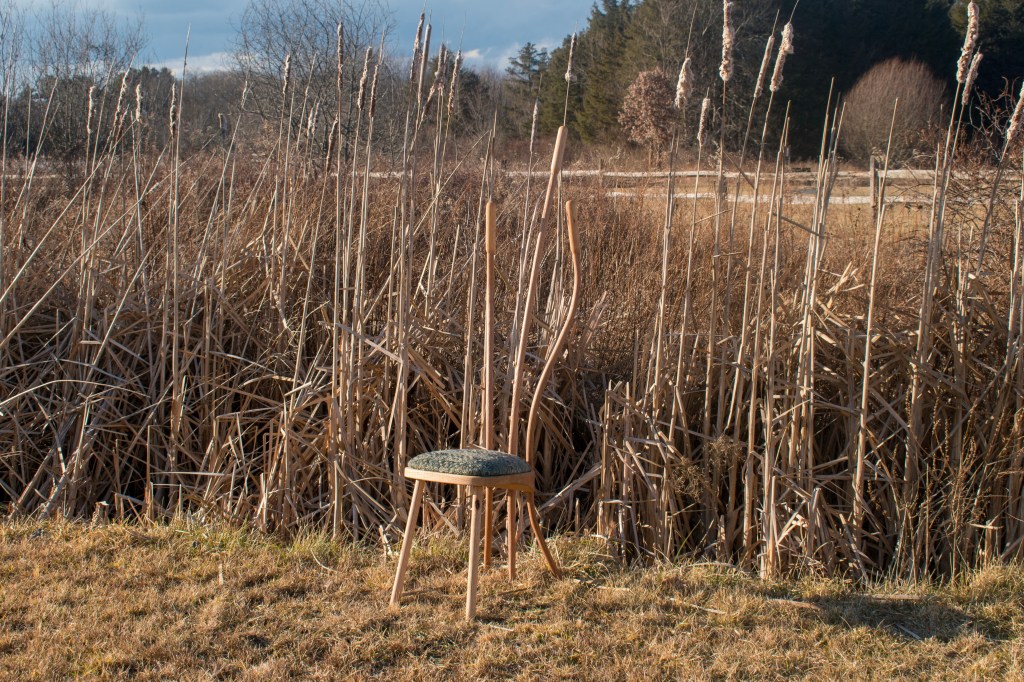
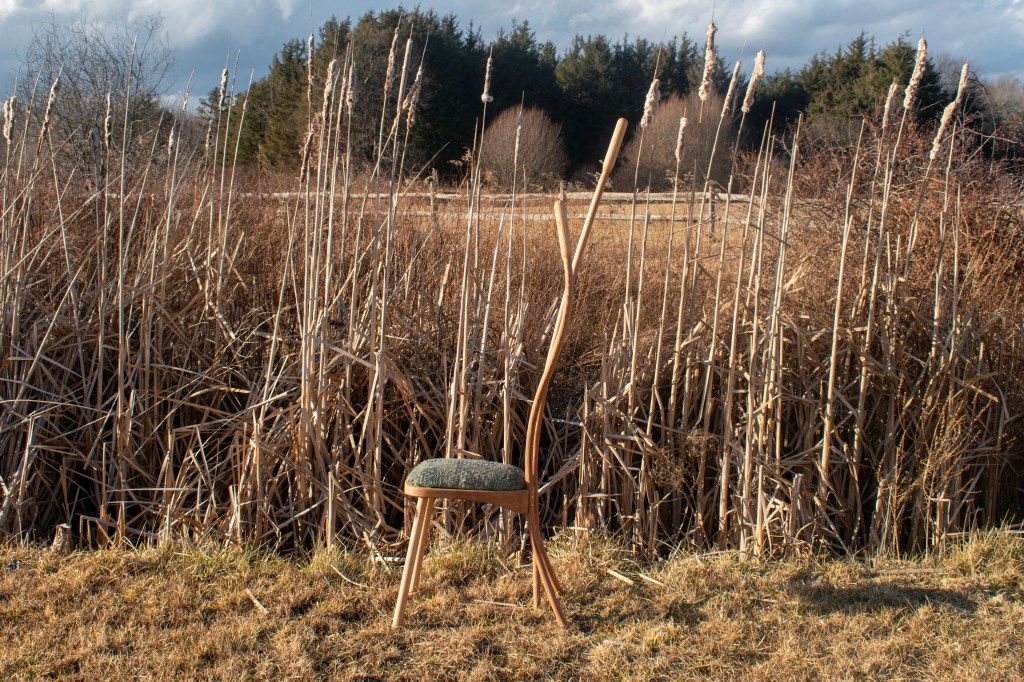
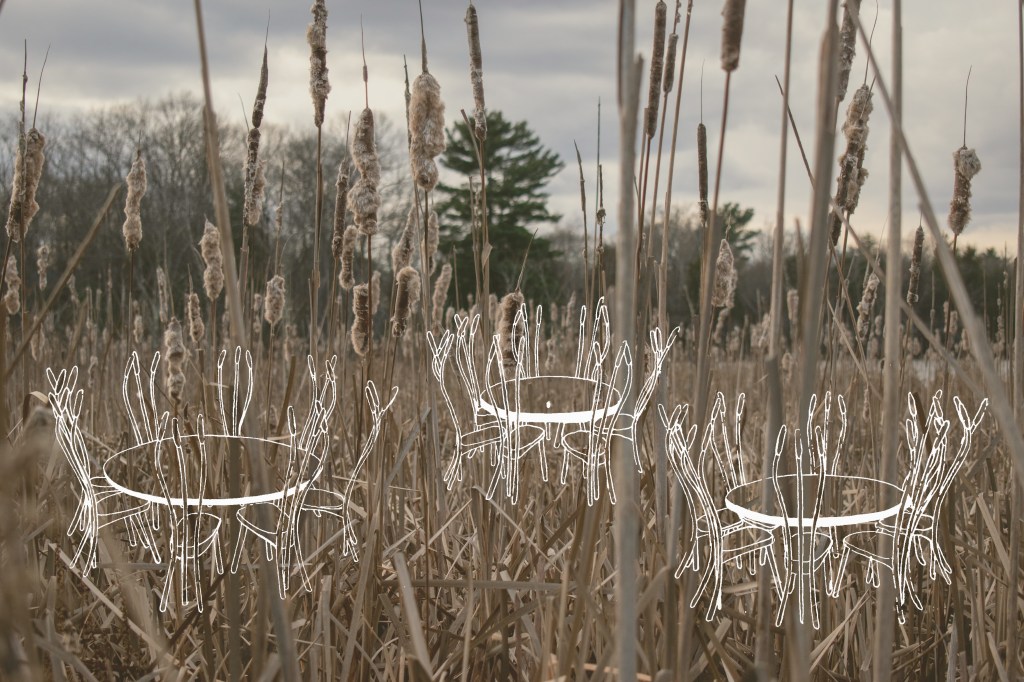
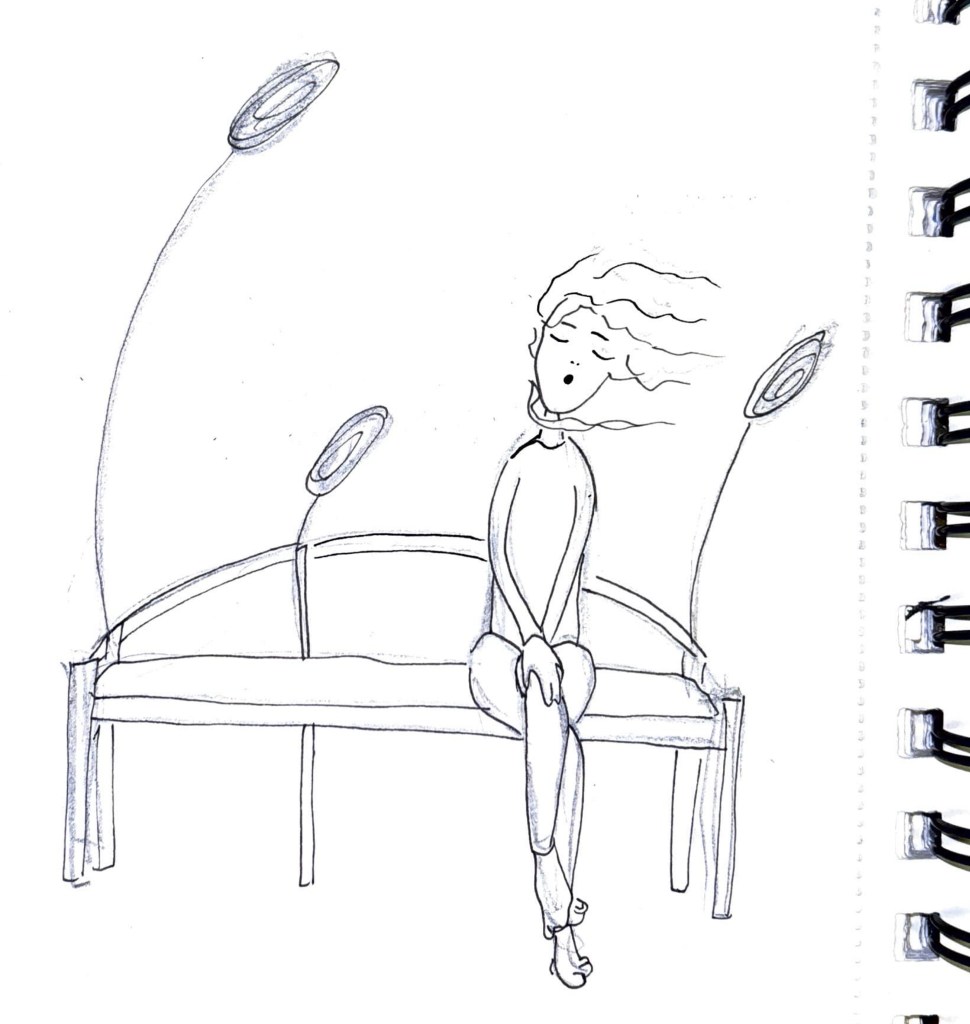
The Typha Chair is designed for community dining, allowing seated guests to enjoy a meal and a moment in shared solitude, mimicking the peaceful, protective activity of hiding in a field of tall grass.
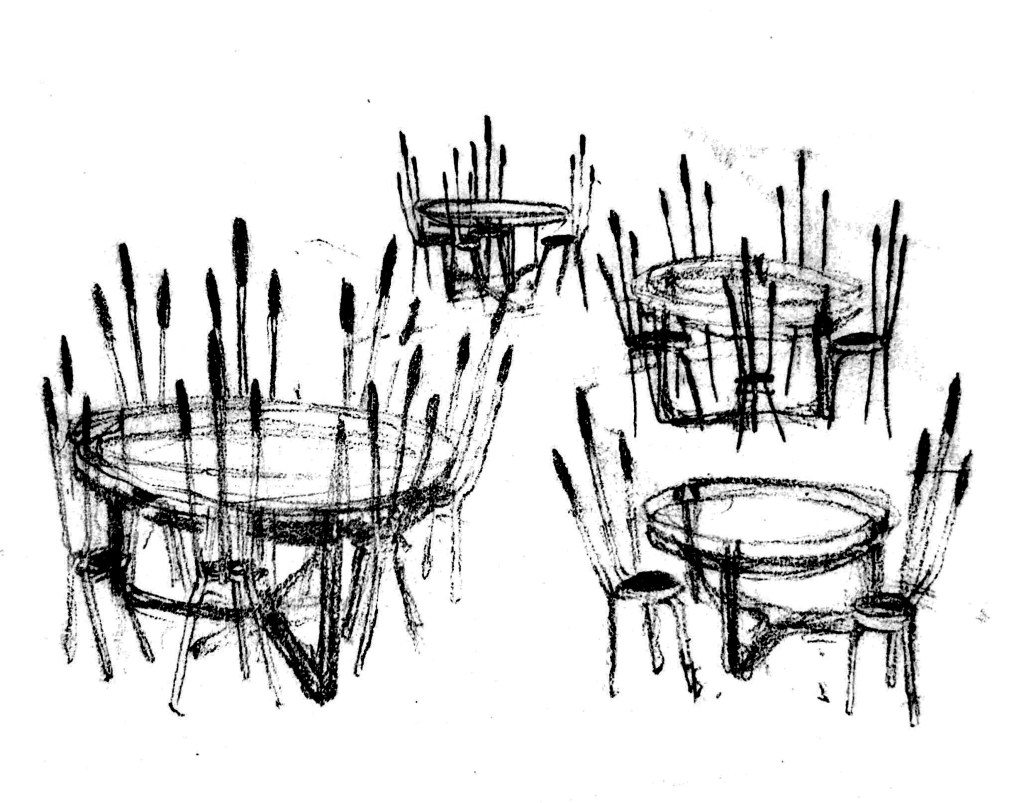
Claire imagines this chair in a farm-to-table restaurant around circular tables and chatting people. The tall chair back will poke above and curve around the patrons’ heads, giving the sense that guests are being enclosed by the furniture, protecting whatever is shared inside, the way cattails guard their pond. She hopes the chair’s protective gestural curves enable intimate connection.
The Typha Chair attempts to bring users not only closer to one another, but also to the natural world
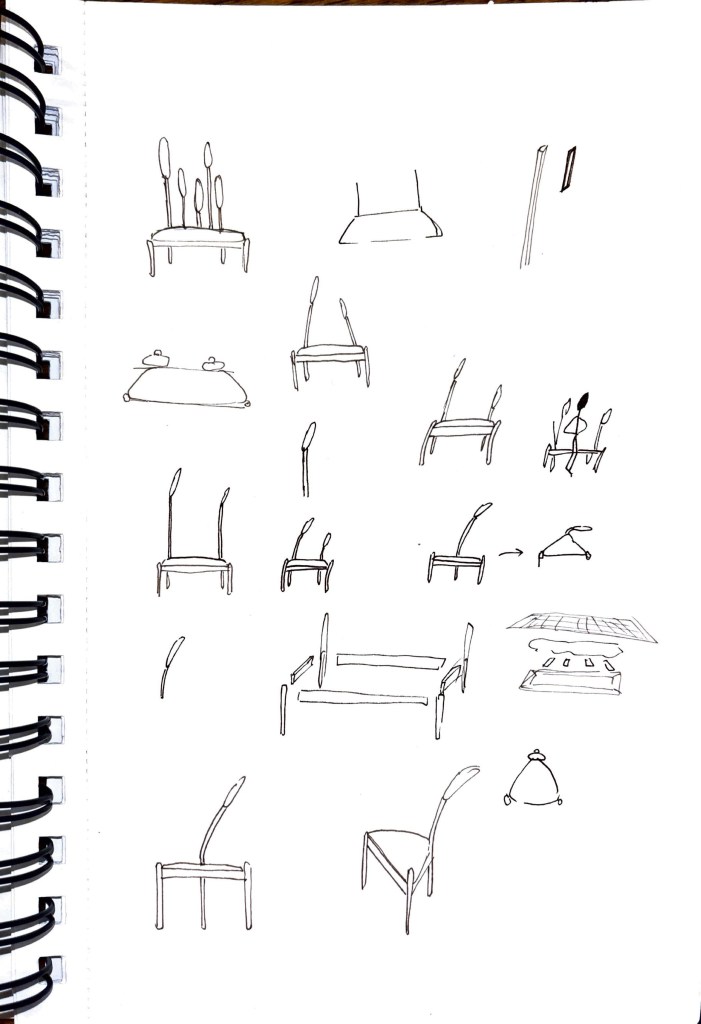
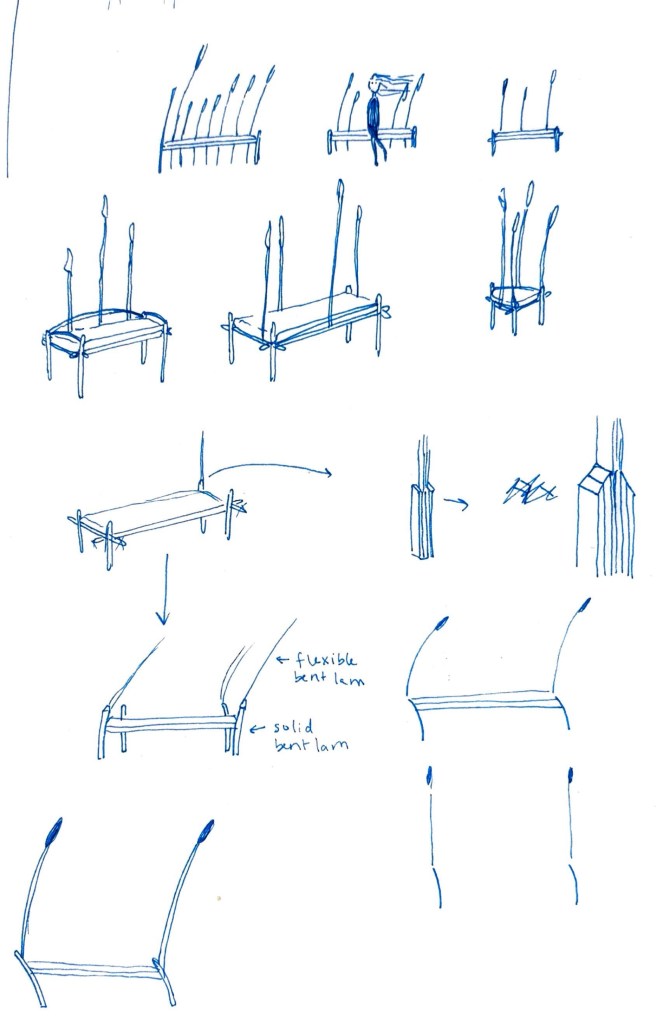
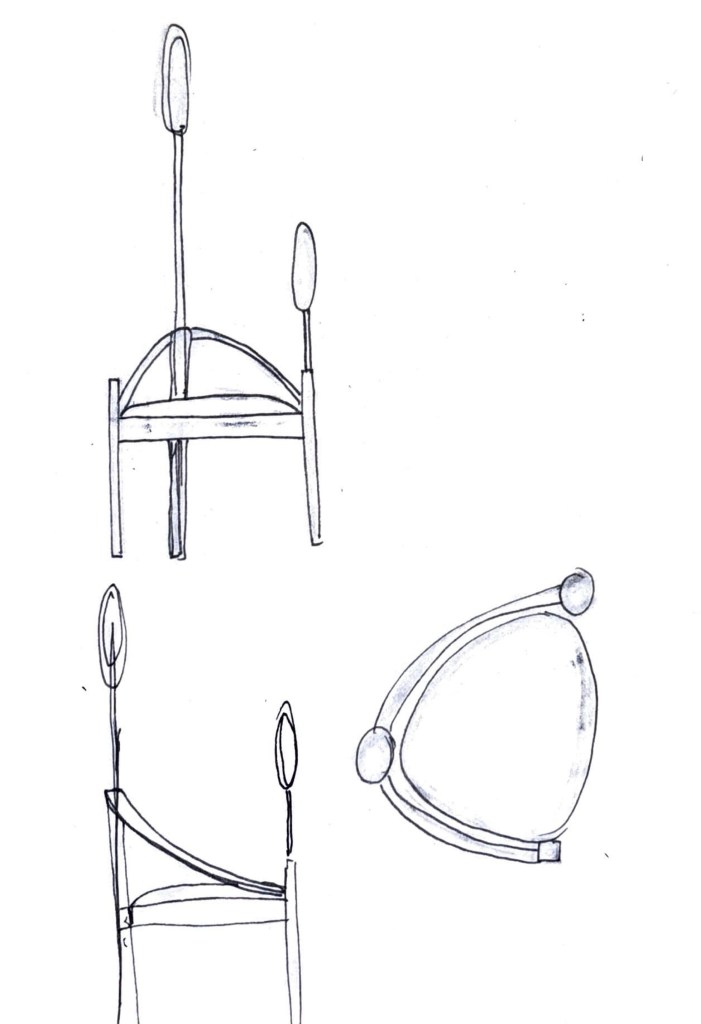
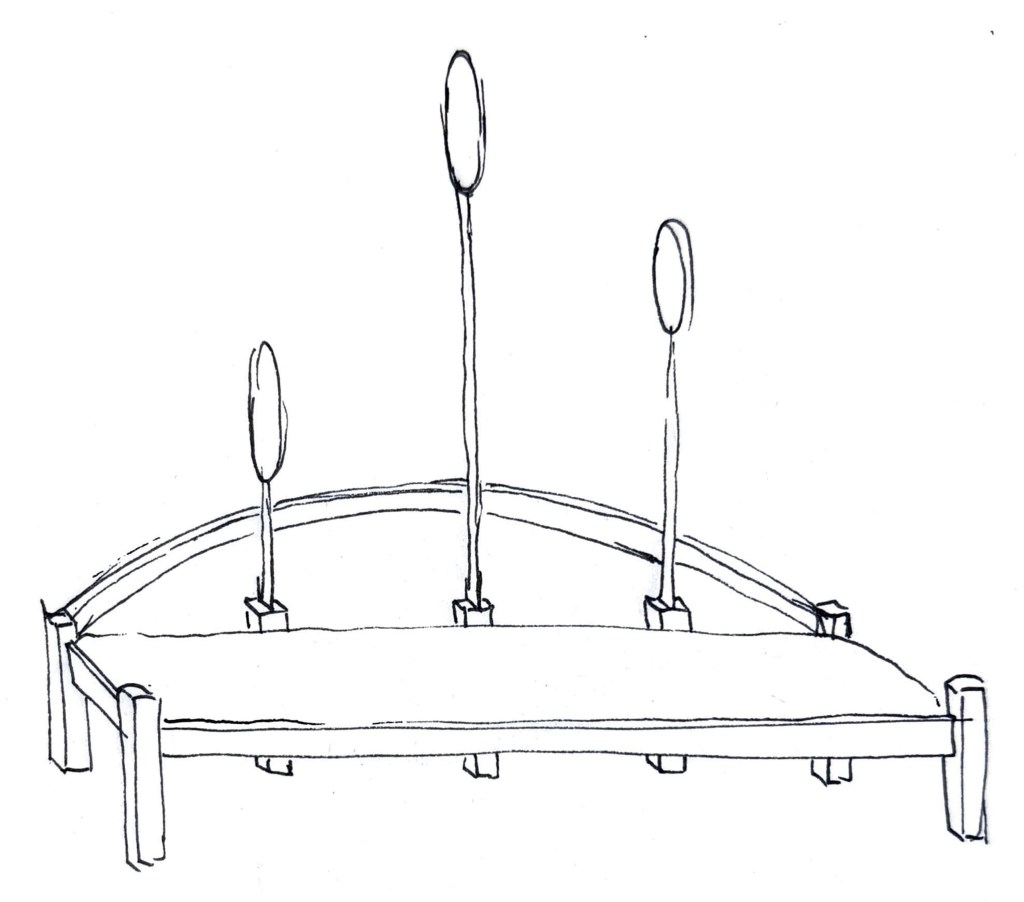
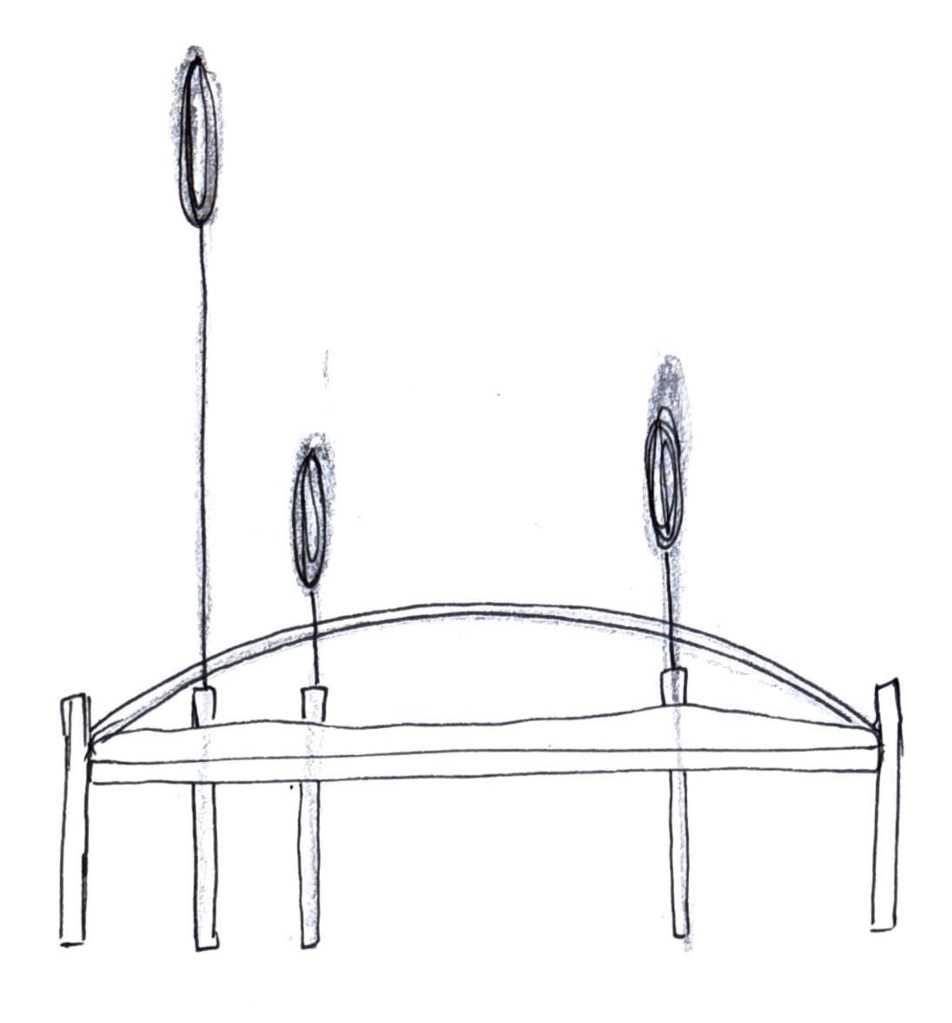
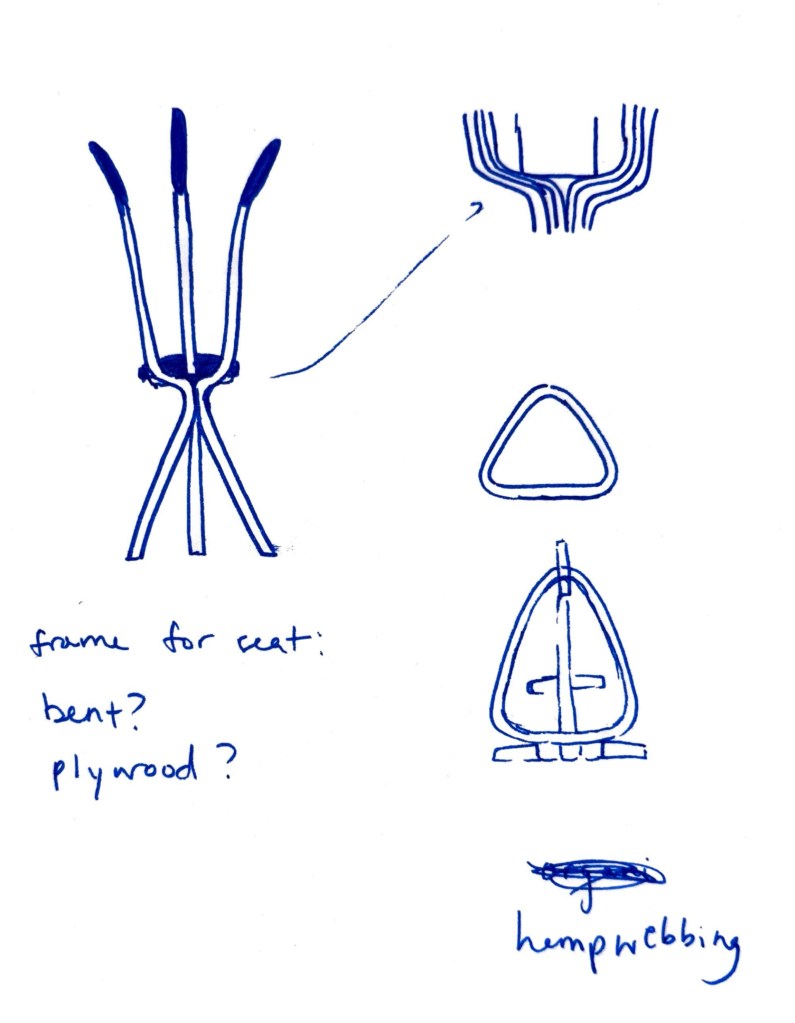
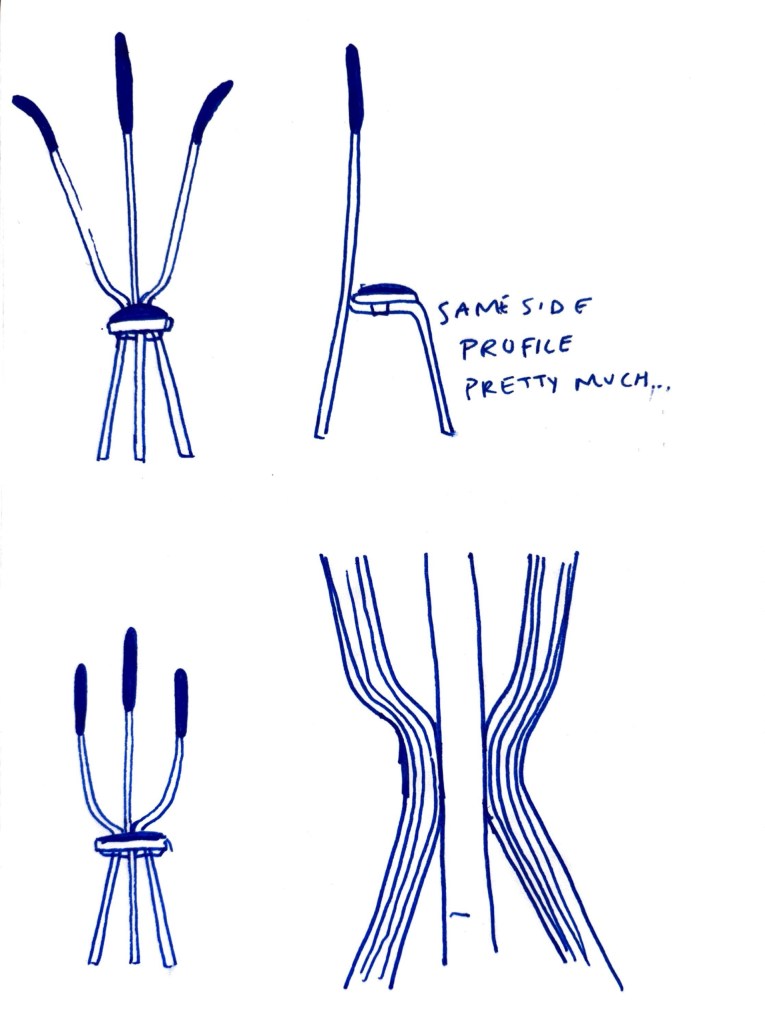
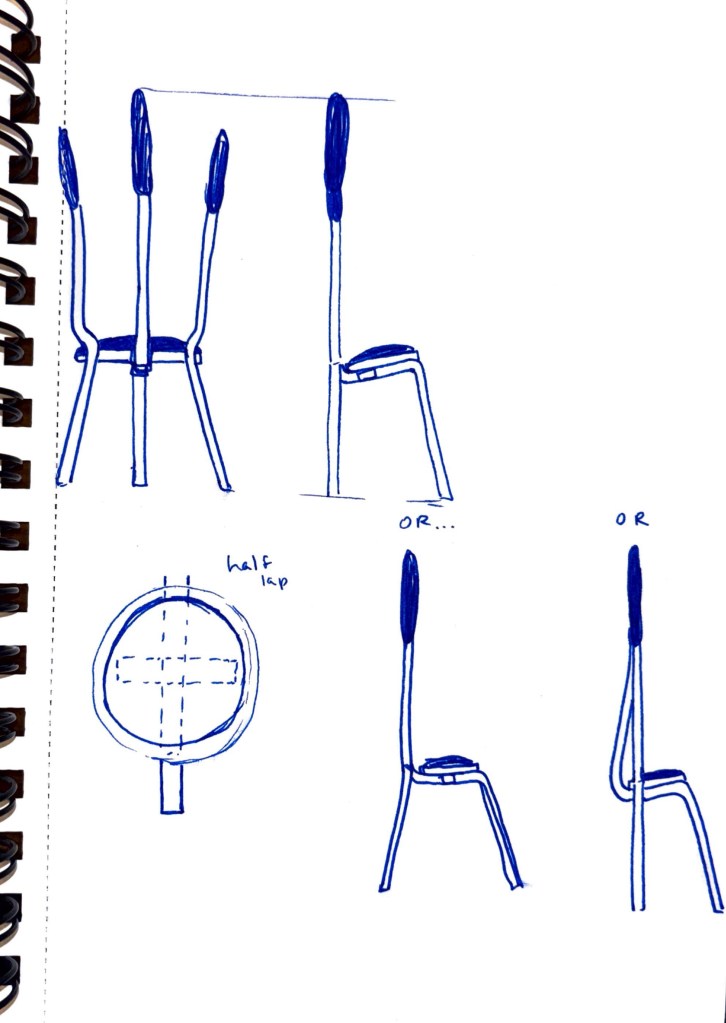
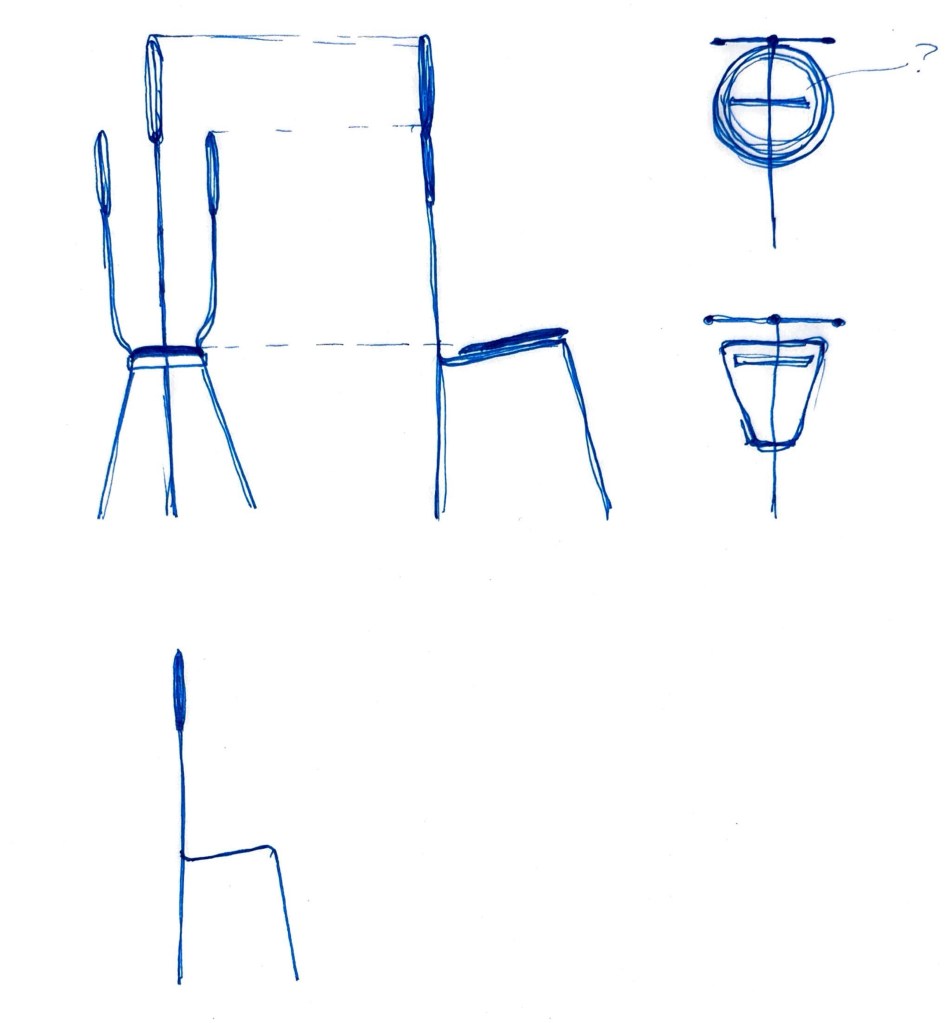
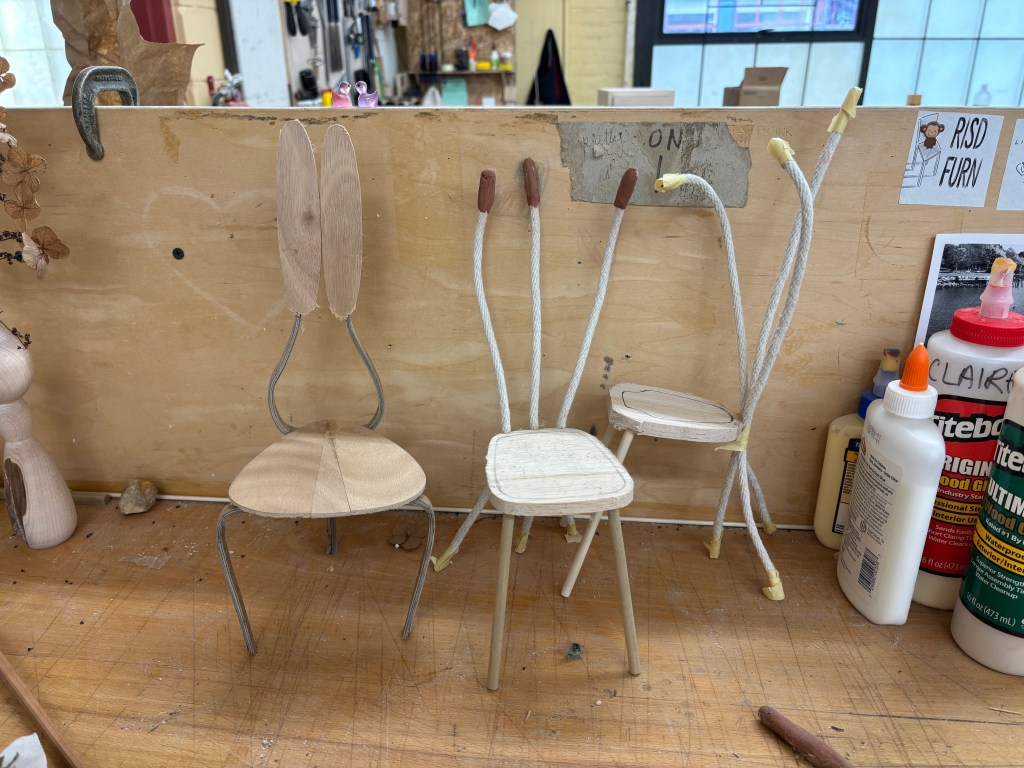
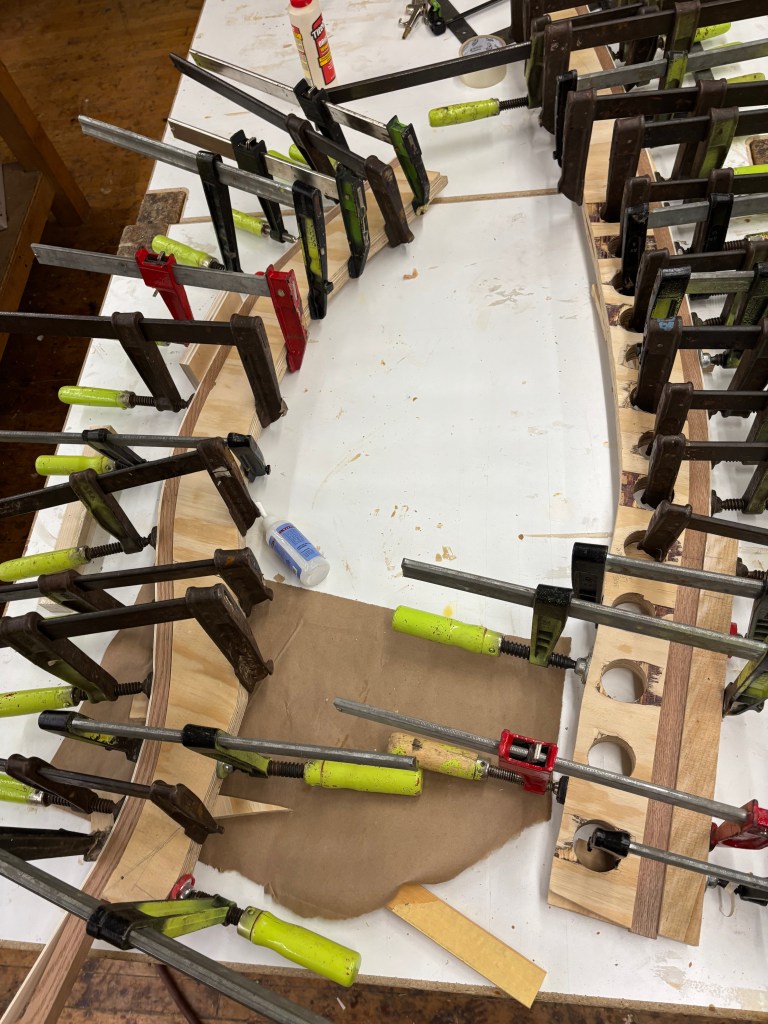
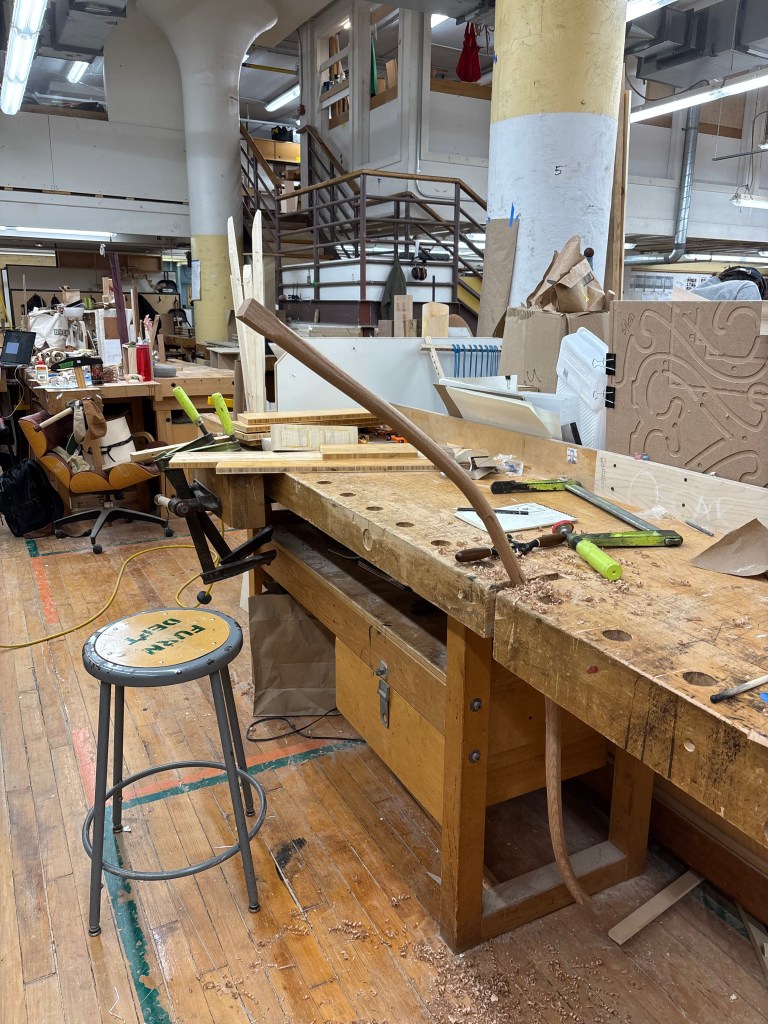
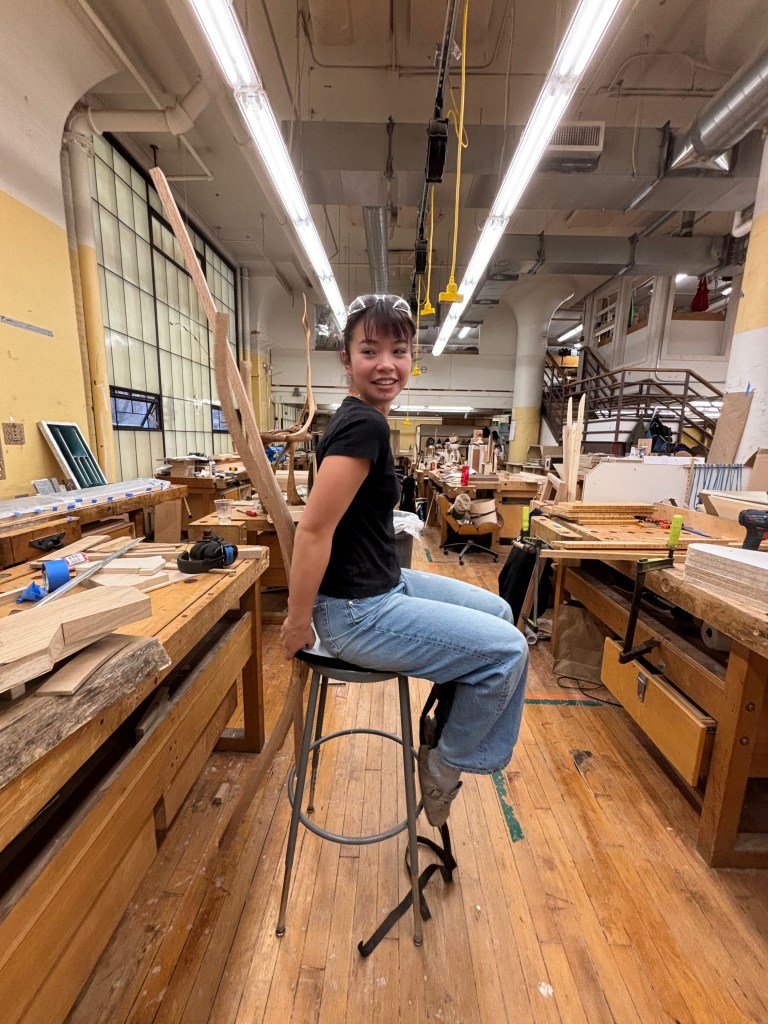
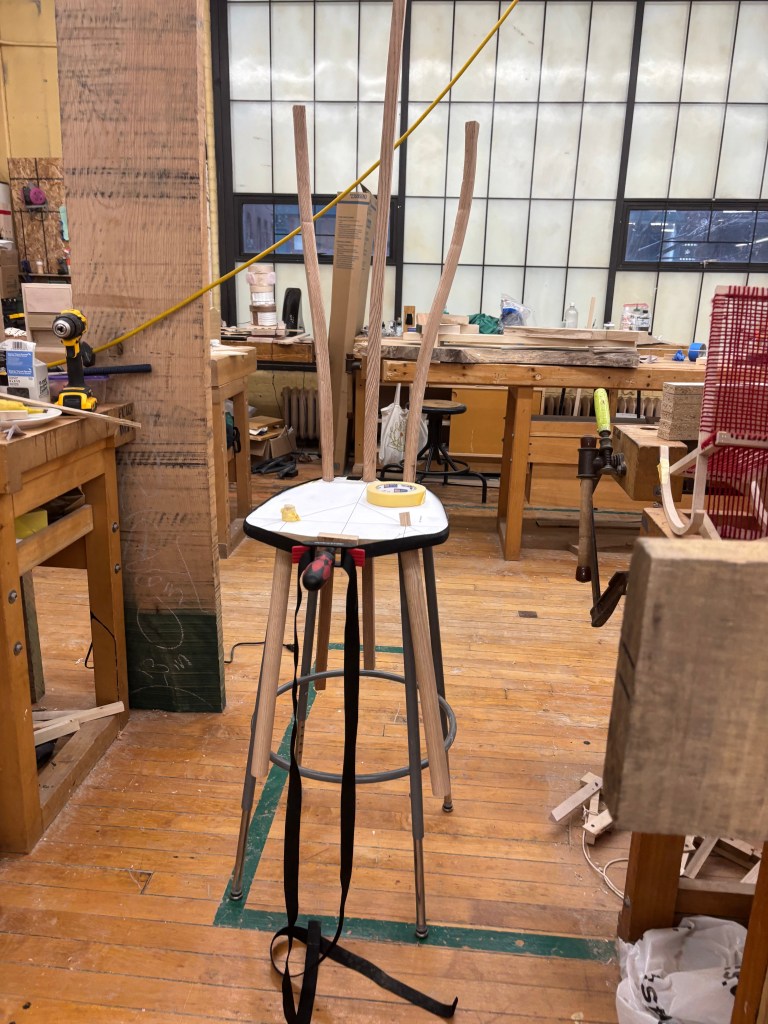
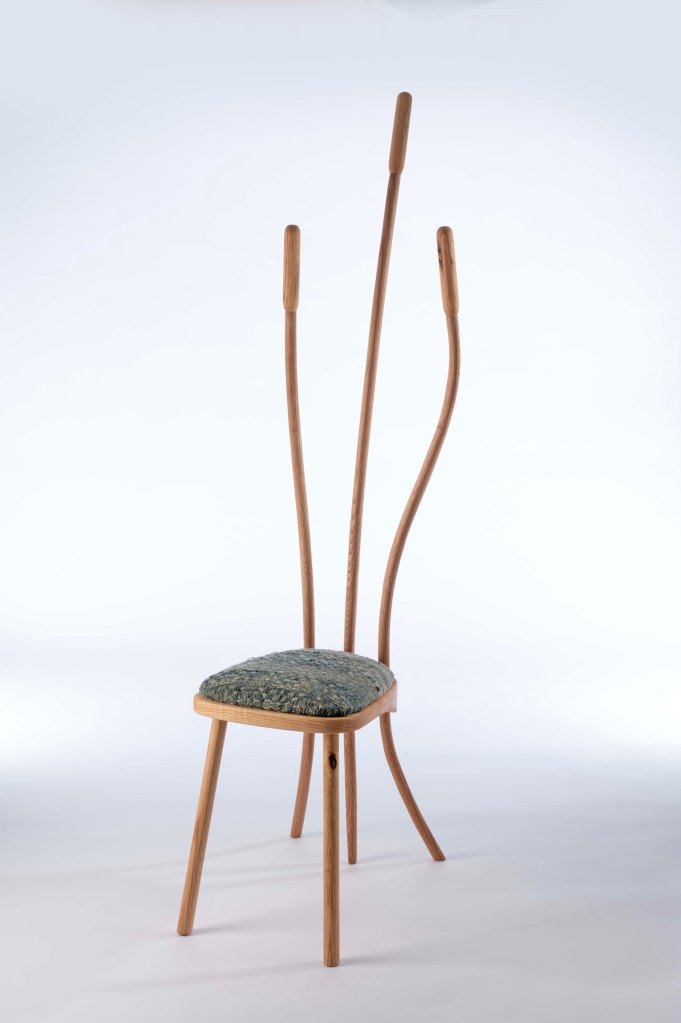
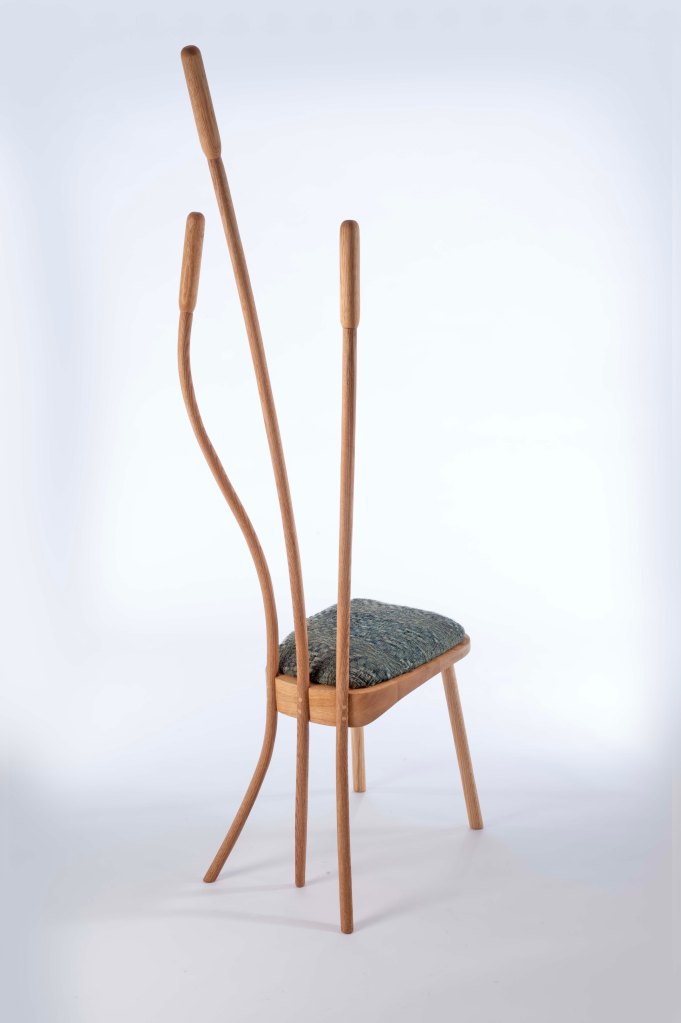
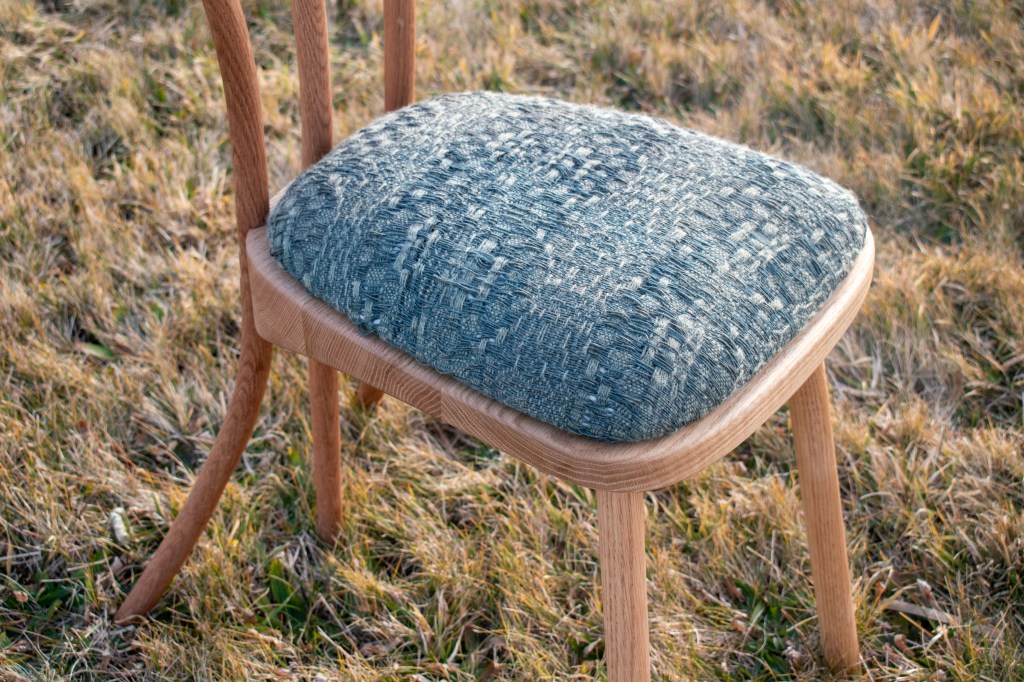
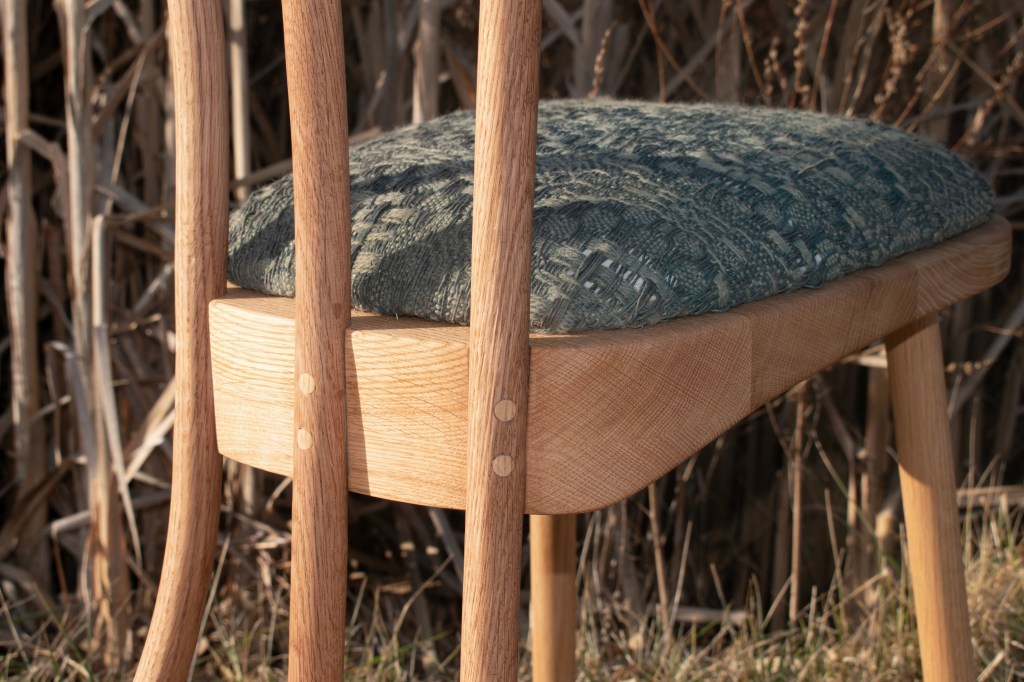
The steam-bent back legs are naively attached to the seat with steel screws, hidden with oak plugs. The front legs were constructed like a Windsor chair, relating to the vernacular attitude of the back legs. The form of the Typha Chair stays true to the materials used, exhibiting design honesty in a beautifully naive and playful manner.
Designed and made for Design + Process, taught by Lothar Windels, and a collaborative final research project for Nature, Culture, Sustainability Studies Core Seminar, partnered with Victoria Neyman, taught by Lucy Spellman
Fall 2025
Claire Lovett 2026 ©

